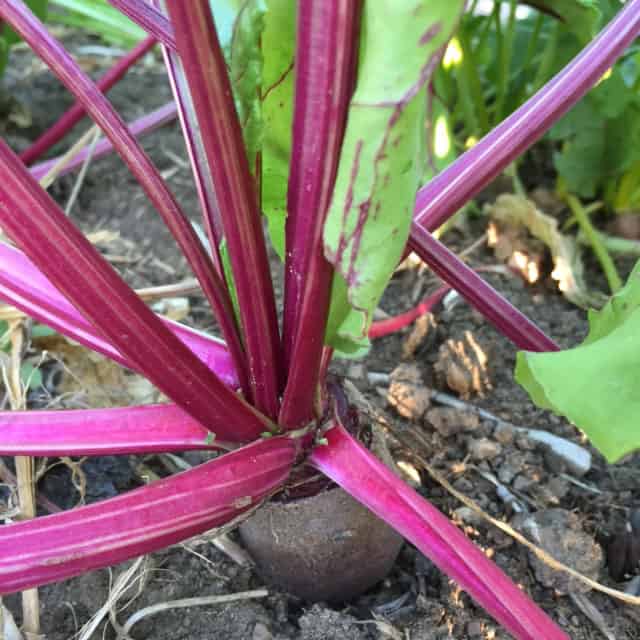
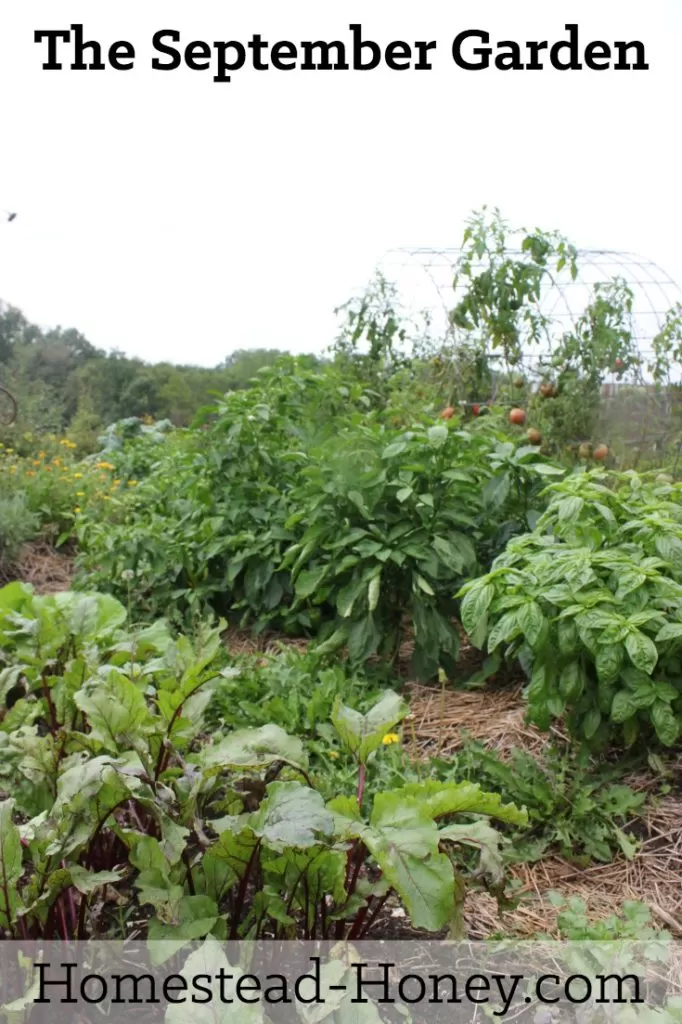
This year’s September garden is a mixture of glorious bounty, and total crop failures. A particularly wet August and September has left the garden much more green and lush than in recent years, yielding more green beans and kale than I can keep up with, and yet that same moisture has meant cracked and diseased tomatoes. I have struggled with pests this year – cucumber beetles and squash bugs have been joined by a new culprit, blister beetles – and I’ve lost all of my zucchini, winter squash, and cucumber plants (even with multiple sowings), and the blister beetles did a number on my fall beets. Luckily, they’ve made a valiant comeback, and I should have a nice beet harvest to store in the root cellar.
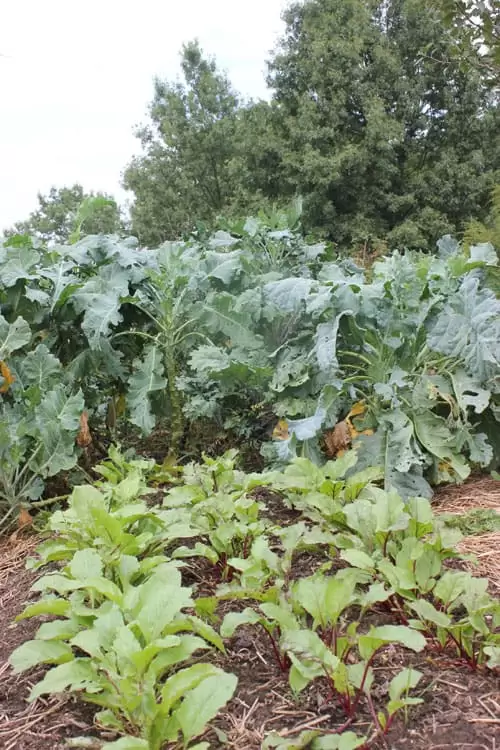
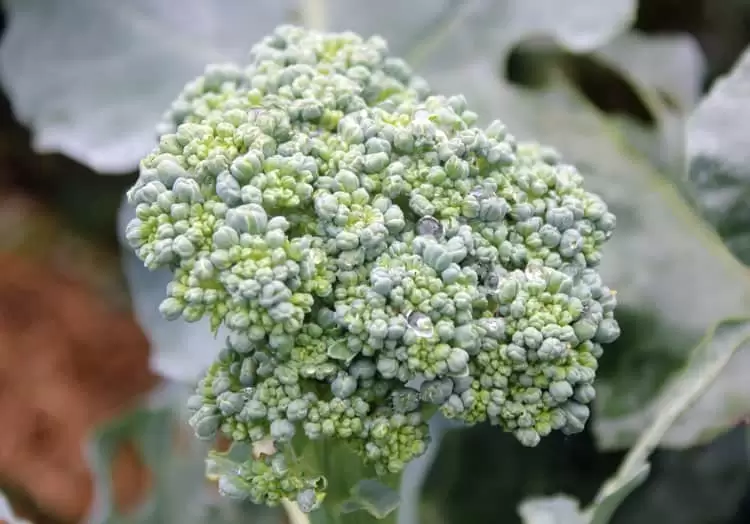
Even the same broccoli plants that first produced in June are sending out side shoots enough for our family to enjoy once a week.
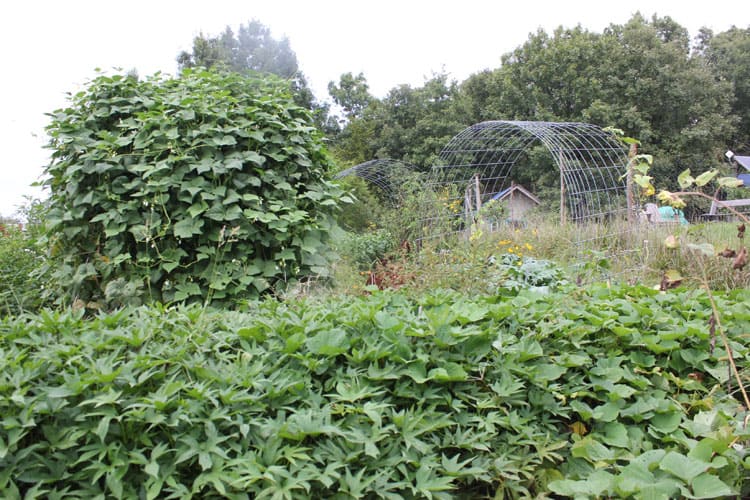
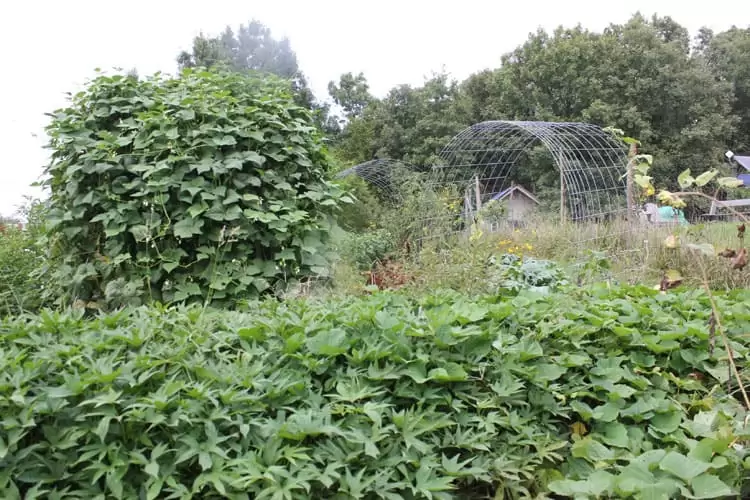
The sweet potatoes, which you can see in the foreground below, are the real champs of this year’s garden, spreading across neighboring beds. I hope the tubers below are just as bountiful, as they are one of my top five crops to store for winter.
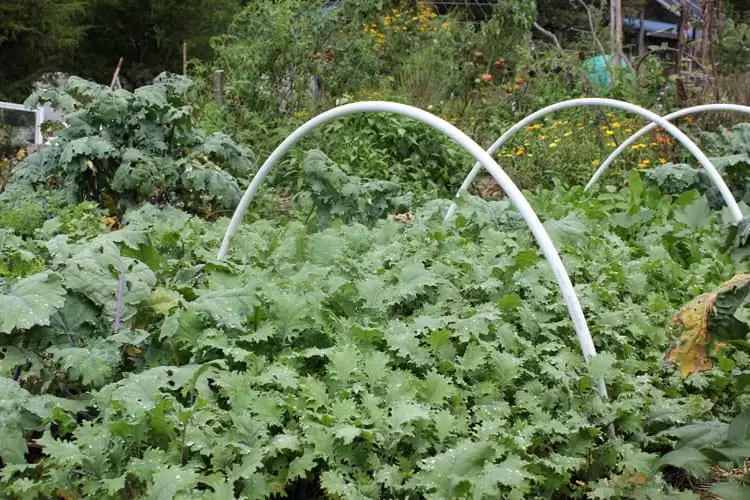
The bed you see below is full of young kale volunteers. This spring I simply let a bed of kale go to seed, and I’ve been rewarded with kale EVERYWHERE! It’s amazing. If I had to offer two tips for gardening with less work, one would be to plant perennials like rhubarb, blackberries, walking onions, and strawberries. The other would be to let your greens go to seed! All of the lettuce, kale, arugula, and cilantro I have currently growing are volunteers, which has saved me a ton of labor, not to mention money on seed purchases!
The white hoops you see over the kale bed will eventually be covered with row cover and clear plastic, which, barring extreme prolonged cold temperatures, should enable me to harvest greens all winter long.
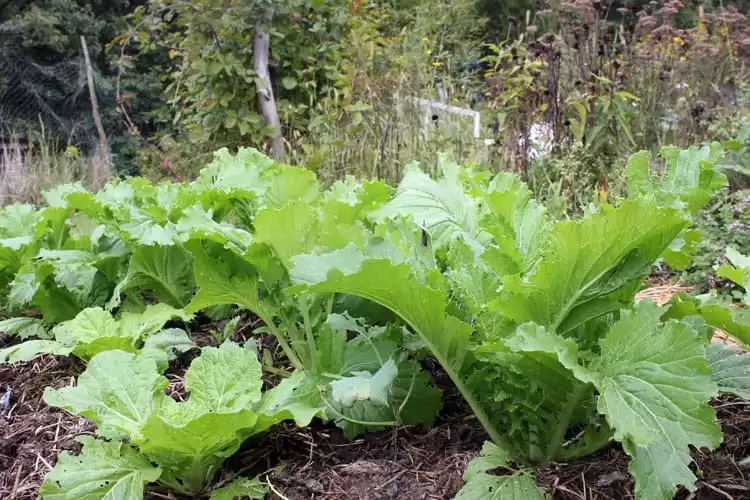
These Chinese cabbage are also coming along nicely. Last year I harvested my Chinese cabbage bed in mid-November, right before we got our first killing frost, and tossed them into the root cellar, soil still attached to their roots. I was able to enjoy raw cabbage salads through February! I guess the big take home message is that yes, sometimes gardening is a LOT of work. But sometimes there are these sweet moments of just ignoring a bed of kale, and getting a whole new year’s harvest in return, or simply tossing cabbage into cool storage, that really balance out the sweating, digging, and weeding.
What’s growing in your September garden?
Pin it for Later:
More homesteading inspiration!